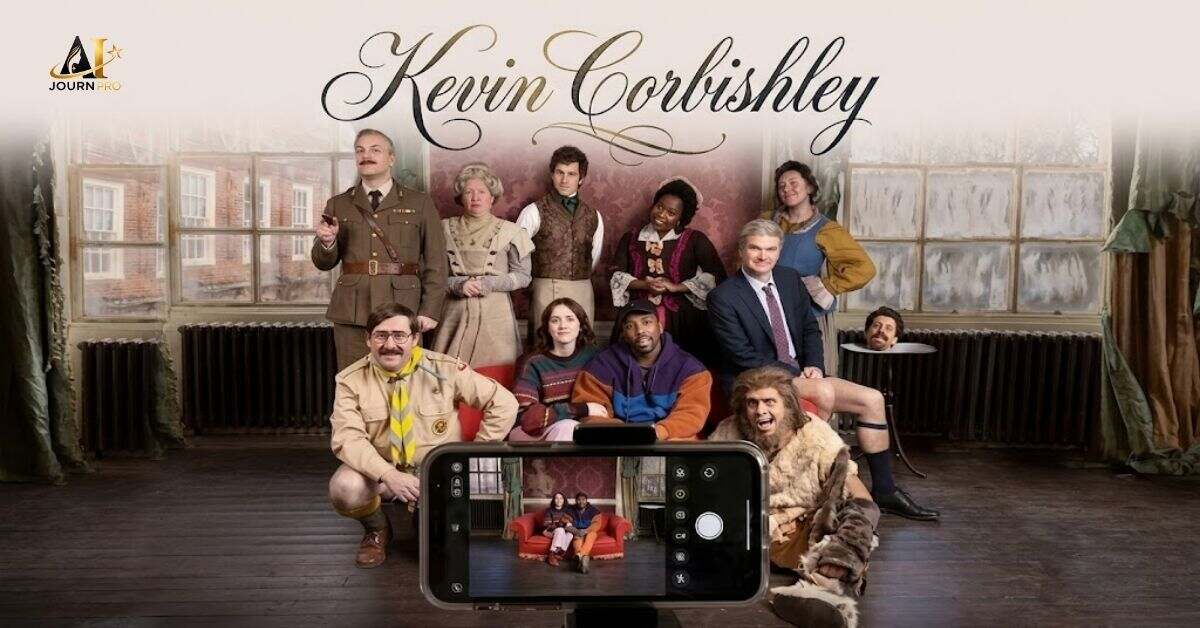
Kevin Corbishley is a British television professional who has worked behind the scenes in the entertainment industry. While he may not be as widely known as the actors who appear on screen, his work as a valued television crew member has contributed to the production of various projects. His career offers an interesting look at the people who help bring television productions to life away from the spotlight.
Despite maintaining a relatively private profile, Kevin Corbishley has attracted attention because of his work in television and his connection to the entertainment world. His professional journey reflects the important role that skilled crew members play in creating successful productions. In this article, we explore Kevin Corbishley’s life, career, television work, background, and the lesser-known details that have made people curious about his story.
Career Beginnings and Role in Television Production
Publicly available information about Kevin Corbishley’s career beginnings is limited, so it would be inappropriate to invent details about his education, family background, or early employment. What can be established is that his work history placed him in technical production roles where hands-on experience, technical skill, safety awareness, and dependable teamwork were important. A light rigger works closely with the lighting department, production teams, and other technical crew members to prepare and secure lighting equipment for filming.
The role of a rigger combines physical work with technical precision. A lighting rigger may need to position lighting fixtures, secure equipment, support a lighting setup, check equipment handling procedures, and cooperate with a Gaffer or Cinematographer. Lighting technicians and other members of the Lighting department must also consider safety protocols, equipment maintenance, equipment safety, and working at heights. These responsibilities make rigging an important part of technical production rather than a simple equipment-moving task.
In practical terms, Kevin Corbishley’s role would have connected creative direction with technical execution. The Gaffer, Cinematographer, Camera operator, Set designer, Sound engineer, Costume designer, and other production crew members each have different responsibilities, yet their work depends on collaboration. Lighting affects focus, mood, atmosphere, visual tone, continuity, and the overall look and feel of a scene.
Work on Call the Midwife (2020–2022)
Kevin Corbishley joined Call the Midwife in 2020 as a rigger and worked on 15 episodes across several seasons, according to the available account of his production work. The BBC series is set in London’s East End during the Mid-20th century, meaning its production teams must maintain a convincing period environment. Lighting therefore contributes not only to visibility but also to period authenticity, visual experience, and narrative atmosphere.
Within Call the Midwife, Kevin Corbishley would have worked as part of a broader production environment involving Gaffers, Cinematographers, Set designers, Camera operators, lighting technicians, and other Television crew members. The Lighting department has to respond to different locations and scene requirements, from a Delivery room to a Night-time street or an Outdoor market. Each setup can demand careful Equipment setup, Lighting continuity, safe rigging, and attention to the creative direction established for the scene.
The visual identity of a Period drama depends heavily on controlled Lighting. Warm lighting can create an intimate visual tone, while Dim lighting can support night-time scenes without making the image unreadable. Period-accurate lighting can help establish a sense of time, while Creative lighting can shape mood and atmosphere. The Light rigger supports that process by helping the technical side of the Lighting setup function reliably.
The work is also part of a larger production workflow. A filming schedule can change, location requirements can develop, and Last-minute changes can affect the scene setup. A Production crew must therefore combine Adaptability with Pressure management. Safe rigging and equipment securing remain essential even when a production environment becomes demanding.
Kevin Corbishley’s final contribution to Call the Midwife came during season 11, with the finale episode identified as his last work on the series. When the episode aired in February 2022, the programme included an on-screen dedication reading “In memory of Kev Corbishley: 1965–2022.” That message provided a public record of his connection to the production and became an important part of his television legacy.
Contribution to Ghosts
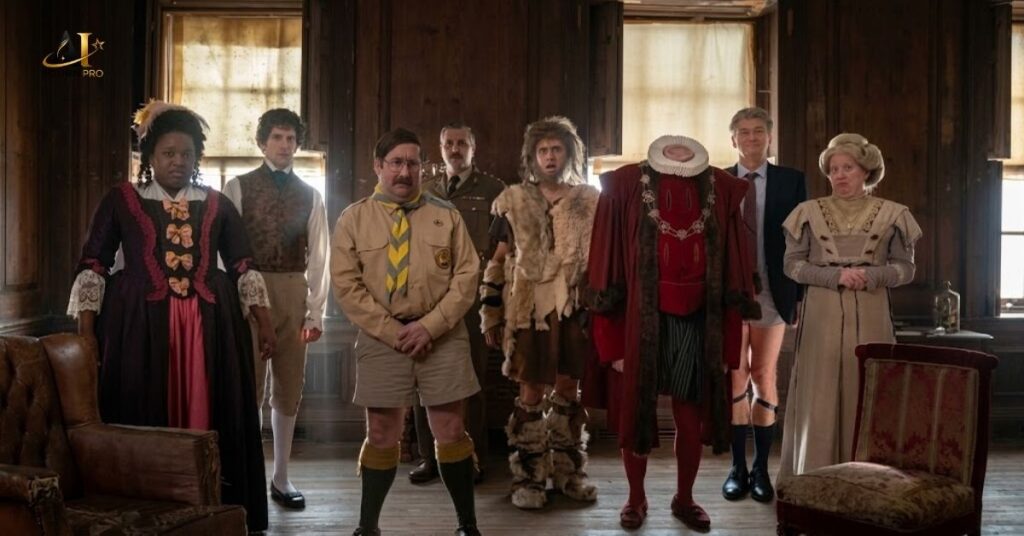
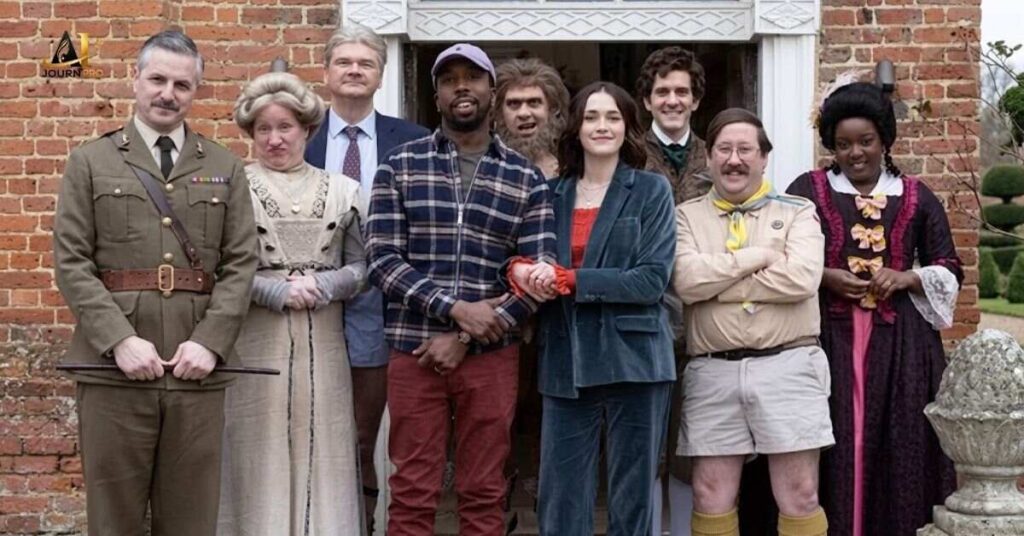
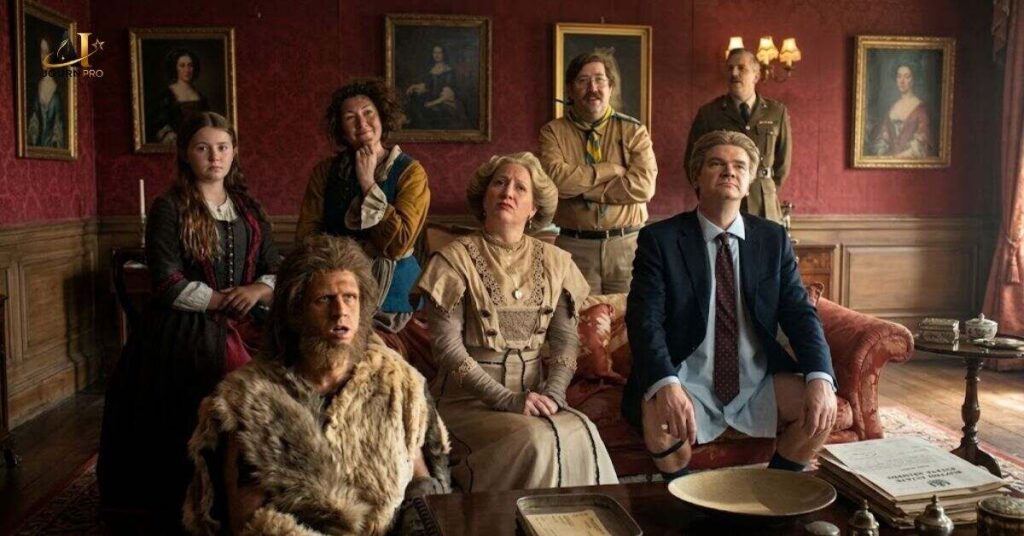
Kevin Corbishley also worked on the BBC comedy Ghosts, joining the production during its second season and remaining involved during its later stages. Ghosts presented a very different technical challenge from Call the Midwife. Rather than the nostalgic visual tone of a period drama, the comedy series combined living characters, ghost characters, historic properties, location shoots, and a playful visual approach.
For Kevin Corbishley, work on Ghosts would have required the same underlying technical expertise while responding to a different creative direction. A comedy series can demand bright visuals, controlled Scene lighting, and carefully managed Spectral effects. The production also needed to distinguish the living world from the Ghostly world without undermining the Comedic tone.
Historic properties can create particular challenges for technical crew members. Modern film equipment and Production equipment must be accommodated within locations that were not originally constructed for television production. Complex rigging may be necessary, while equipment handling, safe rigging, and Technical safety must remain priorities. Heavy gear can create additional challenges when equipment has to be positioned in awkward spaces or at height.
The Ghosts production therefore illustrates why a Rigger needs more than basic technical knowledge. Equipment setup must be efficient, Lighting continuity must be maintained, and technical execution must support the production team without interfering with actors, camera movement, set requirements, or the filming schedule.
Tragically, Kevin Corbishley died shortly before filming began for the fourth season of Ghosts. The season premiere included a dedication to him, providing another on-screen tribute and demonstrating the professional legacy he left among colleagues and the production community.
Skills and Qualities That Defined His Work
The technical side of television production depends on skills that audiences rarely see. Kevin Corbishley’s work as a light rigger required Technical expertise, Attention to detail, Teamwork, Reliability, Adaptability, and Problem-solving. These qualities are especially valuable when a production has limited time to complete an equipment setup or respond to an unexpected change.
Some qualities associated with effective technical production include:
- Technical expertise in Lighting and Rigging.
- Attention to detail when checking equipment and Lighting continuity.
- Teamwork across the Lighting department and wider Production teams.
- Reliability during long shooting days and demanding filming schedules.
- Adaptability when locations, scenes, or technical requirements change.
- Problem-solving when equipment or location constraints arise.
- Professionalism when working alongside performers and Creative departments.
- Work ethic during physically demanding work and long hours.
- Collaboration with Gaffers, Cinematographers, Camera operators, and other crew.
- Precision when carrying out Equipment setup and technical execution.
- Safety awareness when handling Heavy equipment and Heavy gear.
- Creative problem-solving when standard rigging approaches are unsuitable.
- Dependability when a production requires trusted crew members.
- Hands-on experience with Film equipment and Production equipment.
- Technical skill developed through Set experience.
- Pressure management when production challenges occur.
- Risk management during Working at heights.
- Equipment maintenance and careful Equipment handling.
- Safe rigging under demanding workplace conditions.
- Clear communication within the Production department.
A strong Production crew depends on these qualities because television production is rarely predictable. A shooting schedule may change because of weather, a location may impose restrictions, or a scene may require a different Lighting setup. Technical crew members must solve practical problems without compromising Safety protocols or the intended Visual execution.
For Kevin Corbishley, the significance of these qualities can also be understood through the fact that his work appeared across different television series. Moving between a Period drama and a BBC comedy requires Adaptability and an understanding of different visual requirements. The same technical foundation can support a Warm visual tone in one production and Spectral lighting in another.
Read More:Health ThreeTrees com vn: Your Comprehensive Guide to Holistic Wellness and Healthy Living
The Importance of Behind-the-Scenes Roles
Television is a collaborative medium. An actor may be the most visible participant, but the finished On-screen presentation depends on a large network of production staff. Gaffers, Cinematographers, Camera operators, Sound engineers, Costume designers, Set designers, Lighting technicians, riggers, and other Television crew members all contribute to the finished result.
The Lighting department is particularly important because lighting affects both technical image quality and Creative direction. Lighting fixtures must be positioned correctly, lighting equipment must be secured, and equipment maintenance must be completed. At the same time, Scene lighting must support the story rather than distract from it. This relationship between technical execution and Visual storytelling is central to television craftsmanship.
A Light rigger may spend much of a working day away from the camera. The work can include Equipment setup, Light rigging, Rigging solutions, equipment securing, and equipment handling. Some tasks involve Heavy gear and physically demanding work. Others involve careful planning around Working at heights, Safety protocols, Workplace safety, and Technical safety.
The physical side of the occupation should not be underestimated. Production crews can work long hours in challenging conditions, especially during location shoots or complex Studio production. Equipment may need to be moved between locations, checked before use, and secured so that it does not endanger people or interfere with the scene.
Safety is therefore inseparable from good technical production. Safe rigging, Equipment safety, Risk management, and Safety awareness protect both the crew and the production. Technical precision matters because a poorly secured item can create consequences beyond the Lighting department.
The role also demonstrates the importance of Invisible work. Audiences may notice a bright image, Dim lighting, Warm lighting, or a convincing Ghostly world, but they generally do not see the person who positioned the equipment that produced the result. That does not make the work less significant.
Kevin Corbishley’s career illustrates this principle. His contribution was not primarily about public recognition. It was about dependable work within a Production team, supporting Creative execution and enabling other departments to concentrate on their own responsibilities. The result is a form of television craftsmanship that is easy to overlook precisely because it works so effectively.
Tributes and Legacy
The tributes connected with Kevin Corbishley are particularly significant because they appeared on two different BBC productions. Call the Midwife included the “In memory of Kev Corbishley: 1965–2022” message during its season 11 finale, while Ghosts opened its fourth season with a dedication. These moments created a public record of a professional whose primary contribution had taken place behind the scenes.
An On-screen tribute can serve several purposes. It can acknowledge a colleague, recognize a contribution, provide a Memorial, and allow viewers to understand that a member of the production community has been lost. For Television crew members, such recognition can be particularly meaningful because their work is normally anonymous to audiences.
The tribute also gives context to the idea of Professional legacy. Kevin Corbishley’s legacy does not depend on acting credits or public appearances. Instead, it rests on the Production quality and visual experience associated with projects to which he contributed. His work became part of a larger team effort involving Technical crew, Lighting crew, Camera department, Sound department, Costume department, and Creative departments.
His Death in 2022 ended an Active career, but it did not erase the work already completed. Episodes continue to exist, and audiences continue to experience the visual choices made by the production teams. That continuing availability creates a form of Television legacy and Permanent record.
The tributes also demonstrate Industry recognition. A colleague can be remembered not only for technical expertise but for Dependability, Collaboration, Professionalism, and the ability to function well under Pressure management. Such qualities can have a lasting influence on a production environment even when they never appear in promotional material.
In this sense, remembering Kevin Corbishley means recognizing the wider British television industry. The British production community depends on thousands of technical specialists whose names may never become widely known. Their contribution supports Storytelling, Audience experience, Visual storytelling, Narrative clarity, and the Creative vision of each project.
Remembering Kevin Corbishley
Remembering Kevin Corbishley requires separating documented information from speculation. Public sources provide useful information about his professional involvement with Call the Midwife and Ghosts, but they do not provide a complete biography. There is little reliable public material about his family, personal interests, education, or life away from Film production.
That contribution extends beyond one department. Lighting interacts with camera work, set design, costume, sound, and direction. A Cinematographer may establish the visual plan, a Gaffer may lead lighting operations, and a Light rigger may handle essential rigging work that makes the plan physically possible. Each role contributes to Creative execution.
Kevin Corbishley’s connection with Call the Midwife and Ghosts also shows the range of technical production. One project demanded Period accuracy and a Warm visual tone connected to Mid-20th century London. The other required support for a Ghostly world involving Spectral lighting, Historic properties, and an Ensemble cast.
His work therefore represents more than a job title. It reflects the broader concept of Television craftsmanship: the combination of technical precision, Creative problem-solving, Safety awareness, Teamwork, and professional dedication required to make television work.
Final Thoughts
Kevin Corbishley’s story is ultimately a story about the people who make television possible without becoming its public face. As a light rigger, he worked within the Lighting department and broader Production crew, helping productions meet technical requirements while supporting the visual goals of the programmes. His professional path connected technical expertise with practical teamwork.
The connection with Call the Midwife and Ghosts gives his career particular significance because the two shows represent very different forms of British television. One is a Period drama shaped by Period authenticity, while the other is a Comedy series built around an Ensemble cast, Living characters, Ghost characters, and a distinctive Ghostly world.
The on-screen dedication associated with Call the Midwife and the tribute connected with Ghosts transformed a behind-the-scenes contribution into a visible memorial. They also helped preserve a Professional legacy that might otherwise have remained known mainly to colleagues and production staff.
The wider lesson is that Television production depends on hundreds of specialized decisions. Lighting design, Scene lighting, Location lighting, Equipment setup, safe rigging, Continuity, Technical execution, and Collaboration all influence the final On-screen experience. A production succeeds because many people perform their roles with Precision and Professionalism.
Kevin Corbishley’s contribution belongs within that larger tradition of British television craftsmanship. His work was part of the Invisible work that supports storytelling, audience engagement, and production quality. His passing was a loss to colleagues, but the programmes he helped create remain part of the visual record of the British television industry.
Kevin Corbishley photo
A verified public photograph of Kevin Corbishley is not clearly established by the available article material. The source identifies an image with his name, but it does not provide sufficient information to confirm its provenance or establish that it is an independently verified personal photograph. Readers should therefore avoid treating an unverified image as authoritative.
For an article about a behind-the-scenes professional, using a clearly credited production-related image can be preferable to publishing an unidentified portrait. This approach respects the distinction between documented television work and speculation about private life while still giving readers useful visual context.
Kevin Corbishley wikipedia
There does not appear to be a reliable, established Wikipedia biography for Kevin Corbishley in the source material reviewed for this article. Searchers should be cautious about pages, snippets, or social profiles that present unsourced details as established facts.
The most dependable information currently concerns his technical production work, his connection with Call the Midwife and Ghosts, and the tributes associated with those programmes. A lack of a substantial Wikipedia page does not diminish a crew member’s contribution to television production.
Kevin Corbishley age
The available tribute provides the years 1965–2022, which indicates that Kevin Corbishley was born in 1965 and died in 2022. However, the precise birth date is not established by the source, so a precise age should not be presented as fact without additional reliable evidence.
The phrase “In memory of Kev Corbishley: 1965–2022” is the clearest publicly documented date reference connected with his death. It is better to use those verified years than to infer an exact age from incomplete information.
Kevin Corbishley Call the Midwife
Kevin Corbishley’s work on Call the Midwife is the best-documented part of his television career in the available source. He joined the production in 2020 as a rigger and worked on 15 episodes, with his final contribution associated with season 11 and its finale.
The production required a carefully controlled visual approach because the story is rooted in London’s East End during the Mid-20th century. Lighting therefore had to support Period accuracy, Warm visual tone, Nostalgic lighting, and the atmosphere of settings such as a Delivery room, Night-time street, and Outdoor market.
Kevin Corbishley Ghosts character
Kevin Corbishley was not a Ghosts character or an actor portraying one of its fictional figures. His contribution was behind the camera as part of the technical production workforce. The title “Ghosts character” can therefore be misleading if interpreted as an acting role.
His involvement with Ghosts was connected to technical production and lighting support. The BBC comedy used Living characters and Ghost characters within a Ghostly world, requiring a production approach that could maintain a Comedic tone while creating visual distinctions between different parts of the story.
Kevin Corbishley rigger
Kevin Corbishley’s documented occupation within the relevant productions was that of a rigger, specifically a light rigger. The role sits within technical production and involves practical responsibilities associated with Lighting, Rigging, equipment positioning, equipment securing, and workplace safety.
A skilled Rigger must combine Technical expertise with Physical work, Precision, Attention to detail, and Safety awareness. The role can involve Heavy gear, Working at heights, Equipment maintenance, and demanding location conditions, making both Technical skill and Dependability important.
Frequently Asked Questions
Who was Kevin Corbishley, and what role did he play in British television production?
His career demonstrates why technical crew members matter to the British television industry. The audience sees the finished picture, but achieving that picture requires coordinated work from the Lighting department, Camera department, Sound department, Set designers, Gaffers, Cinematographers, and many other Production staff.
What was Kevin Corbishley’s contribution to Call the Midwife?
The programme’s period setting made Lighting particularly important. A Light rigger working with the Gaffer and wider Lighting department could help deliver the Equipment setup needed for scenes ranging from indoor medical settings to Outdoor market locations and Night-time street sequences.
How did Kevin Corbishley contribute to the production of Ghosts?
Kevin Corbishley worked on Ghosts from its second season and was involved during the later stages of the BBC comedy. His contribution was technical rather than an acting role, with light rigging forming part of the wider Production workflow.
Why is the role of a light rigger important in television and film production?
A light rigger helps make the creative Lighting plan physically achievable. The work can involve positioning and securing Lighting fixtures, preparing Equipment setup, supporting safe rigging, maintaining equipment, and coordinating with the Gaffer, Cinematographer, Camera operator, and other technical crew.
How did Call the Midwife and Ghosts honor Kevin Corbishley after his death?
Together, these tributes created a visible record of a behind-the-scenes contribution. They showed that the production community valued his Professionalism, Collaboration, Work ethic, Technical skill, and personal presence as a Colleague and Friend, while preserving his contribution as part of the Television legacy of both productions.
Conclusion
Kevin Corbishley represents the essential but often unseen workforce behind British television. His career as a Light rigger connected Technical production, Lighting, Rigging, Safety, and Collaboration with the creative needs of productions such as Call the Midwife and Ghosts.
His on-screen tributes turned a private professional loss into a public act of remembrance. While many details of his personal life remain undocumented, his contribution to television production is preserved through the programmes, credits, colleagues, and memorial messages associated with his work.